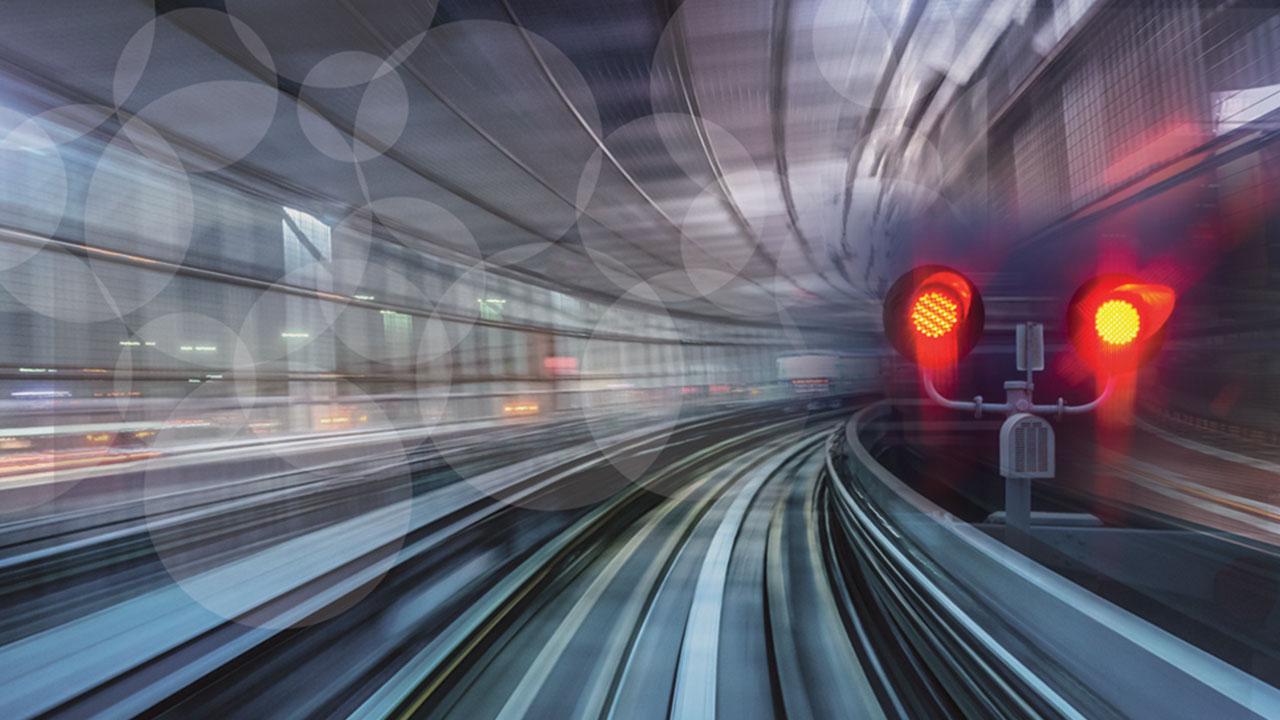
1. Purpose of Signaling Systems
- Safety of Operation: It prevents accidents and collisions by maintaining a safe following distance between vehicles (train, metro, or car).
- Capacity Increase: It allows more vehicles to safely operate on the same track or road by speeding up traffic flow.
- Speed Control and Monitoring: Especially in rail systems, it continuously monitors vehicle speed and automatically applies braking when limits are exceeded.
- Efficiency and Punctuality: It reduces waiting times in public transport and ensures that trips occur at scheduled times.
- Energy Savings: It helps vehicles operate with a more efficient driving profile by preventing unnecessary stop-and-go movements.
2. Importance of Design and Critical Points
Signaling design is a “safety-critical” engineering field where errors are not tolerable:
- Fail-Safe (Safe Mode in Case of Failure): This is the fundamental principle of the design. In the event of a system failure (cable break, software error, etc.), the system must be designed to move all traffic into the safest state (e.g., turning all signals to red and stopping movement).
- SIL (Safety Integrity Level) Standards: The design must comply with international safety standards (such as SIL4, the highest level). This means the probability of system failure is less than one in a million.
- Communication-Based Control (CBTC): In modern metro systems, wireless-based systems are used where trains continuously track each other in real time. This design can reduce headways down to 90 seconds.
- Redundancy: The system’s core processors and communication lines must be designed redundantly to prevent a single point of failure from disabling an entire city.
- Environmental Resistance: Field equipment such as signal lights, switch motors, and sensors must be designed to withstand extreme heat, cold, humidity, and electromagnetic interference.