1. Purpose and Contents of the MV Switchgear Room
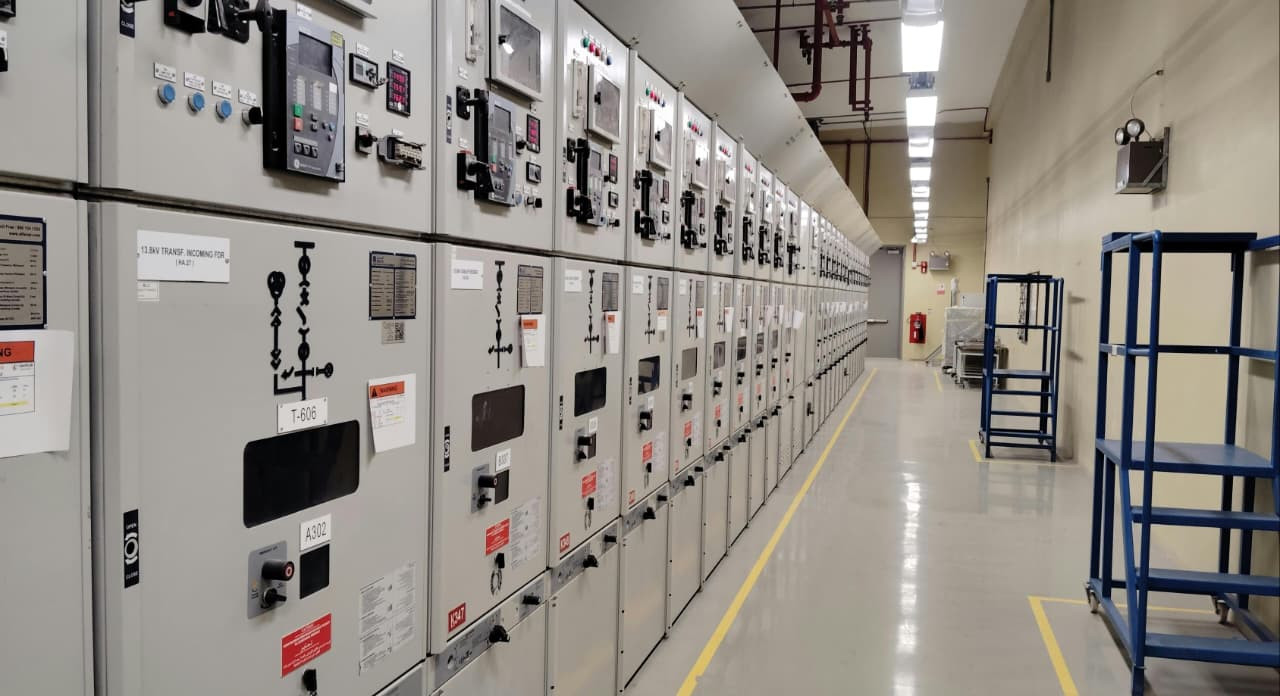
The main purpose of these rooms is to divide electricity into controllable sections. They generally contain the following:
- Input Cells: The points where the incoming power from the grid is connected.
- Metering Cells: The sections where consumed energy is measured using current and voltage transformers.
- Outgoing (Transformer Protection) Cells: The sections that send energy to the distribution transformer for voltage reduction and disconnect the current during faults.
2. Cell Types (Air-Insulated and Gas-Insulated)
Cells are divided into two types according to the insulation material used to prevent electrical arcing:
- Air-Insulated Cells (AIS): Insulation between conductors is provided by air. They occupy more space but are easier to maintain.
- Gas-Insulated Cells (GIS): The interior is filled with SF6 gas. They can fit into much smaller spaces and are not affected by external conditions such as humidity and dust. They are preferred in confined areas such as tunnels.
3. Things to Consider in an MV Switchgear Room
Since these rooms carry a high life-safety risk, the following rules are critical during installation and operation:
- Ventilation: Cells generate heat during operation. The room must have adequate natural or forced (fan-assisted) ventilation.
- Insulating Mat and Safety: There must always be high-voltage-resistant insulating mats in front of the cells. In addition, equipment such as operating rods (hot sticks), insulated gloves, and helmets should be readily available.
- Arc Channel (Arc Flap): If an explosion or arc occurs inside the cell, there must be discharge channels that safely direct the resulting pressurized gas toward the ceiling or outside the room without harming the operator.
- Cable Ducts and Entries: Cable entry points must be sealed with epoxy resin or firestop materials to prevent rodents from entering.
- Lighting: In addition to normal lighting, a strong emergency lighting system is essential so that personnel can safely evacuate during a power outage.
4. Operation and Maintenance (Switching Operations)
The most important operations in MV cells are switching operations.
- Interlocking Mechanisms: Mechanical and electrical interlocks are used to prevent incorrect operations.
- Circuit Breakers: Vacuum or SF6 gas circuit breakers are used to extinguish the arc. These devices interrupt the circuit within milliseconds during a fault.