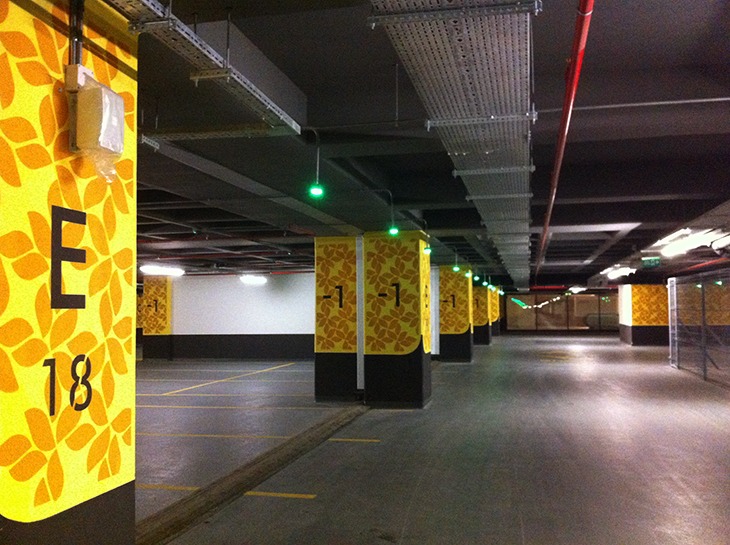
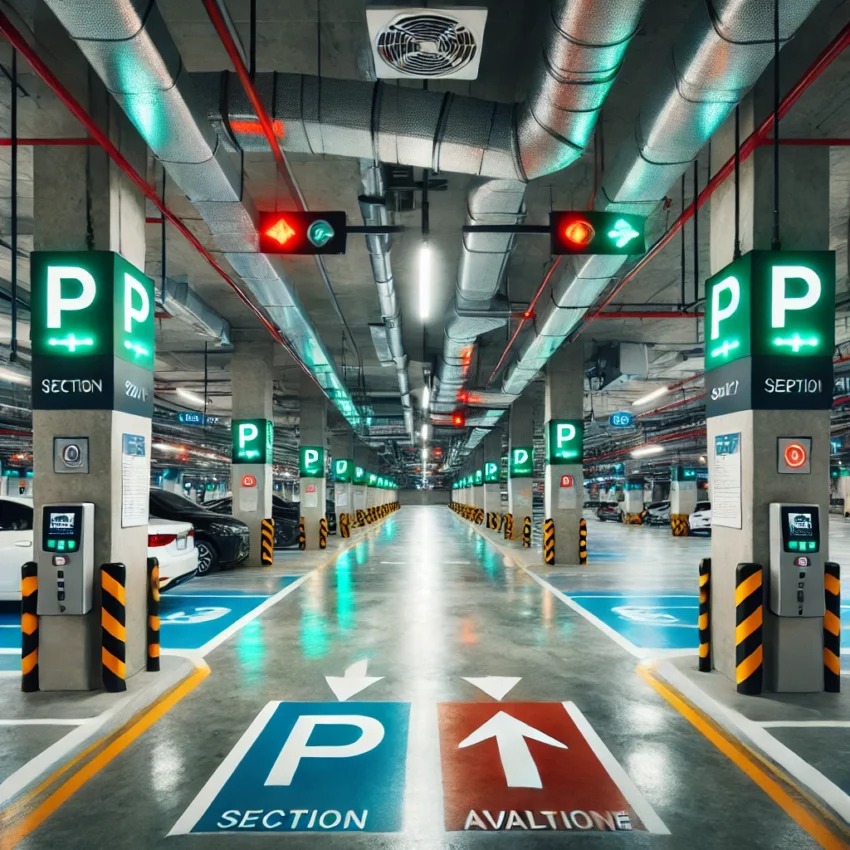
1. Purpose of Parking Guidance Systems
- Reduce Parking Time: It minimizes the time drivers spend searching for empty spaces, preventing traffic congestion.
- Customer Satisfaction: It enables drivers to park comfortably without stress in high-traffic areas such as shopping malls and airports.
- Emission Control and Fuel Savings: It reduces fuel consumption and exhaust emissions by preventing vehicles from circulating unnecessarily inside the parking area.
- Occupancy Management: It provides operators with real-time data and statistics on which floors or zones are more heavily used.
- Security and Tracking: Some advanced systems (camera-based sensors) record exactly where a vehicle is parked, enabling “Where is my car?” functionality.
2. Importance of Design and Critical Points
A poorly designed guidance system can cause chaos by misleading drivers (e.g., showing an empty space that is actually occupied). The following elements are critical in the design:
- Sensor Selection and Placement: Ultrasonic or camera-based sensors installed above each parking space must be positioned to eliminate blind spots and avoid inaccurate readings.
- Strategic Placement of Digital Signage: Signs must be clearly visible to drivers before they make maneuvers, especially at junctions and floor entrances.
- Software and Scenario Design: The system must correctly define special zones such as disabled parking spaces, electric vehicle charging stations, and valet areas.
- Visual Indicators (LED Indicators): Green (empty), red (occupied), or blue (disabled) lights above parking spaces must be bright enough to be clearly visible even from the start of the corridor.
- Integration with Lighting: The design can be combined with smart lighting systems to reduce energy consumption by dimming lights in unused areas and increasing brightness when a vehicle approaches.
- Fast Data Update: The delay between sensor data and display updates must be at a millisecond level; otherwise, two vehicles may be directed to the same “empty” spot.