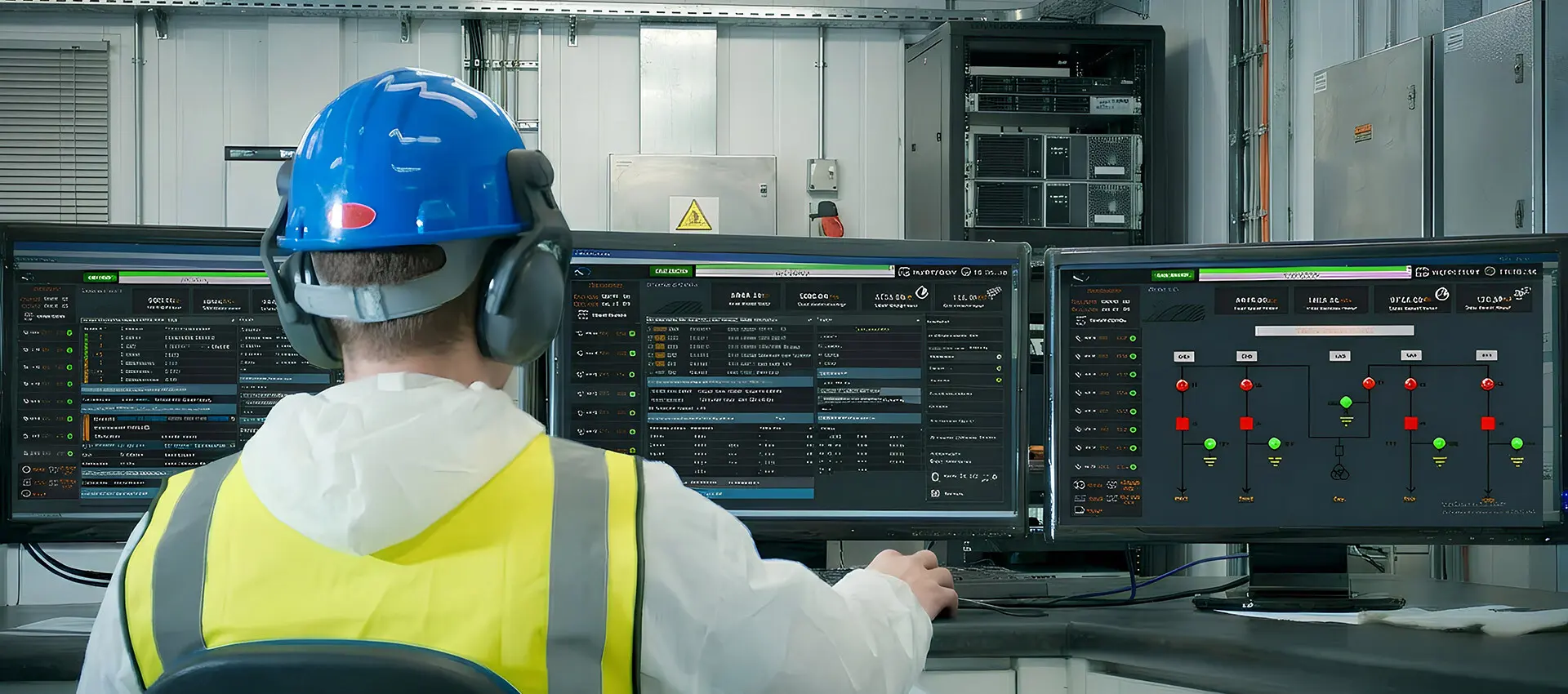
1. Purpose of SCADA Systems
- Central Control and Monitoring: It enables remote control of devices (pumps, valves, motors, etc.) and real-time monitoring of their status without being physically present.
- Data Collection and Reporting: It collects, archives, and analyzes field data such as pressure, temperature, and flow rate to measure operational efficiency.
- Alarm Management: It immediately alerts the operator when critical thresholds are exceeded (e.g., a tank overflow), enabling fast intervention.
- Process Optimization: It improves energy efficiency and operational processes by analyzing historical data.
- Fault Detection and Maintenance: It tracks equipment operating times to enable predictive maintenance and prevent major failures.
2. Importance of Design and Critical Points
SCADA design must be flawless, as it acts as the “brain” of a factory or a city’s water/electricity network:
- System Reliability and Redundancy: The design must include redundant systems (redundant PLC/server) so that the system continues operating even if a server or communication line fails.
- Cybersecurity: SCADA systems are critical infrastructure. The design must be protected by an isolated network and strong firewalls against external cyberattacks.
- HMI (Human Machine Interface) Ergonomics: Operator screens must be designed in a clear, uncluttered way (High Performance HMI), presenting the most critical information as quickly as possible. Poor visual design can lead to operator errors.
- Communication Infrastructure: Bandwidth and protocol selection (Modbus, Profinet, etc.) are critical to ensure real-time, delay-free transmission of data from thousands of field devices.
- Scalability: The software architecture must be flexible so that new units can be easily integrated as the facility expands.