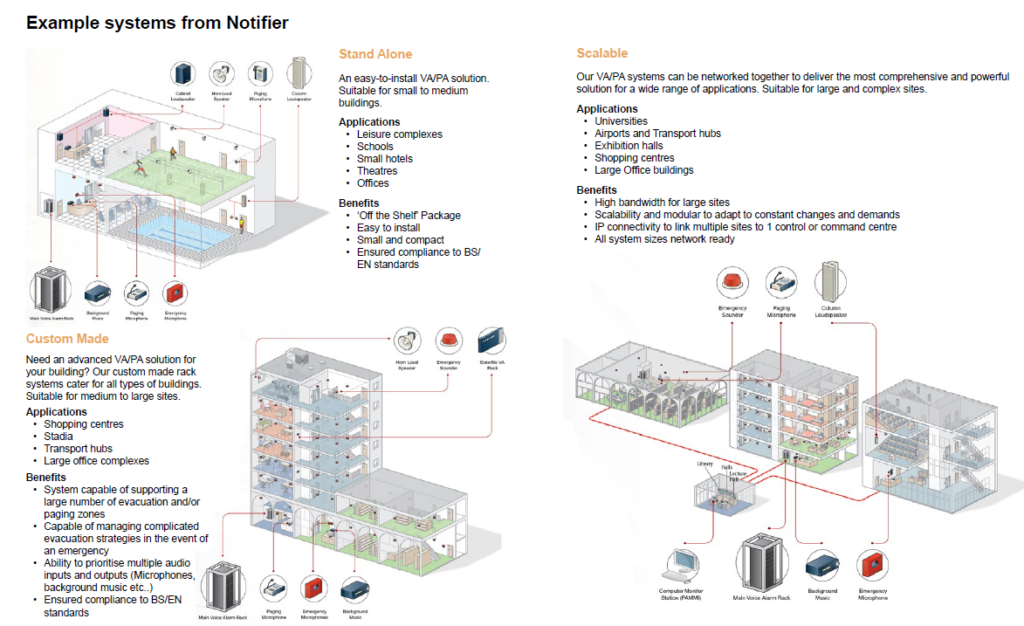
1. Purpose of Emergency Announcement Systems
- Fast and Clear Information: It delivers immediate and understandable messages to people during emergencies to reduce confusion.
- Safe Evacuation and Guidance: It helps people move away from dangerous areas, preventing loss of life.
- Crisis Management: It supports controlling incidents and provides communication support to crisis management teams.
- Automatic and Live Intervention: It can work integrated with fire detection systems to broadcast automatic messages or allow authorities to make live announcements.
2. Importance of Design and Basic Criteria
The design of emergency announcement systems is critical to ensure the system does not become “just noise” at the most critical moments. A proper design should include the following elements:
- Speech Intelligibility (STI): The design should be based not only on speaker power (watts), but on how clearly the sound is heard and understood (decibels and intelligibility).
- Acoustic Planning: The ambient noise level of the environment must be measured, and the announcement sound should be planned to be at least 15 dBA above the background noise.
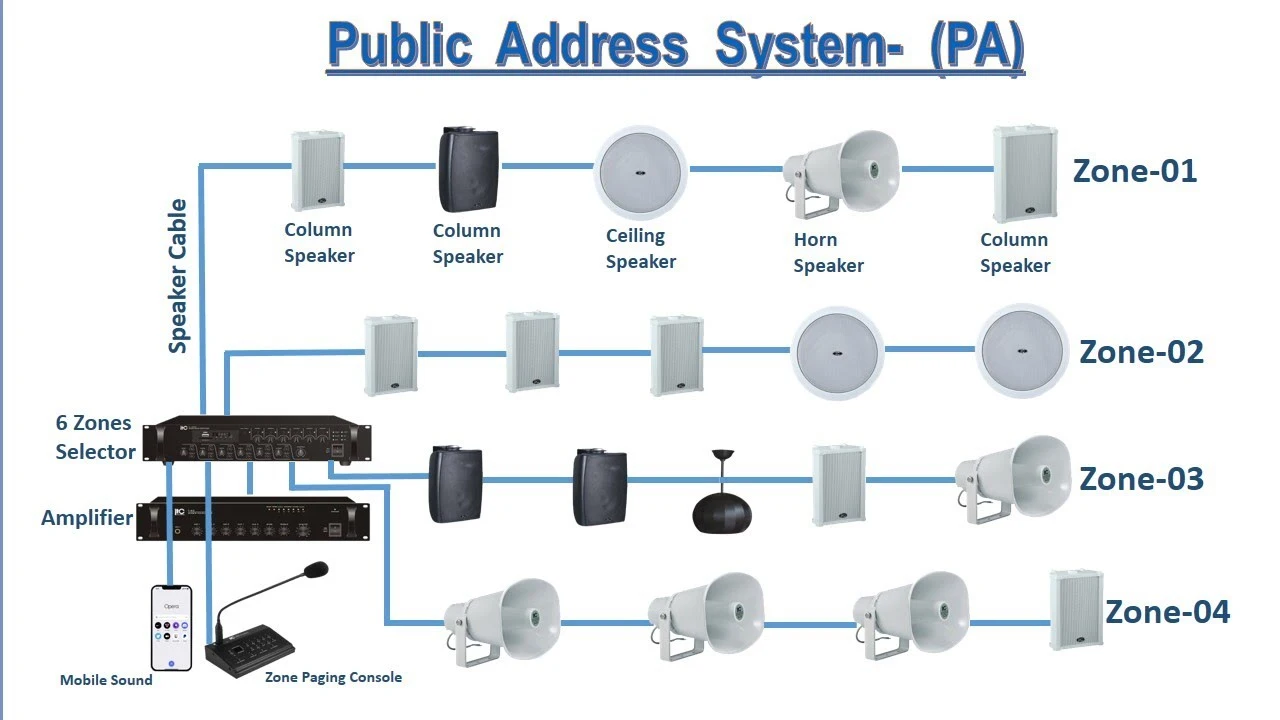
- Zonal Control: Instead of broadcasting the same announcement to the entire building, proper zoning must be implemented to allow different evacuation scenarios depending on the affected area.
- System Continuity: The system must remain operational during power outages through backup power sources (UPS/batteries), and fire-resistant cables must be used.
- Integration: A fully integrated design with fire detection systems ensures that the system activates automatically and without delay during emergencies.