The safe, uninterrupted, and efficient distribution of energy at the point of end use is only possible with properly designed low voltage systems. Geonova Engineering delivers high-standard solutions in Low Voltage (LV) systems for commercial buildings, industrial facilities, and large-scale projects.
Energy distribution in modern buildings must be designed in accordance with safety, flexibility, and sustainability criteria. As Geonova Engineering, we develop turnkey LV solutions tailored to the specific needs of each project.
Scope of our services:
In all applications, we establish safe and long-lasting systems in compliance with national and international standards.
In industrial facilities, energy continuity and system reliability form the foundation of production. In this context, we provide customized LV infrastructures and automation-compatible solutions tailored to the needs of businesses.
Scope of our services:
Efficiency, energy quality, and operational continuity are prioritized in our projects.
Lighting systems are not only designed to eliminate darkness; they are complex engineering solutions that directly impact safety, psychological comfort, energy efficiency, and visual performance. Today, these systems are generally categorized into two main groups: “conventional” and “smart” systems.
Busbar systems are prefabricated modular power transmission systems used for distributing electrical energy within a facility, replacing traditional cable-based systems. They consist of insulated copper or aluminum conductors housed within a metal enclosure, eliminating cable clutter.
Electrical distribution panels are central units that distribute incoming main power to sub-circuits, control these circuits, and house protection equipment such as fuses and circuit breakers.
With these systems, you can reduce energy costs, monitor your carbon footprint, and detect potential failures in advance.
Generator systems are not just a “backup plan” in the modern world, but a cornerstone of operational continuity. They act as an assurance of energy security, especially in environments where even seconds are critical, such as hospitals, data centers, and production lines.
Cable management systems (cable trays, ducts, and ladders) are mechanical infrastructures that hold, protect, and route cables—the nervous system of any facility. Although often overlooked in electrical projects, they are vital for system sustainability.
UPS (Uninterruptible Power Supply) systems are electronic systems that protect connected equipment and ensure energy continuity during power outages, voltage fluctuations, or sudden surges in the electrical grid.
Unlike generators, they activate within milliseconds when a power interruption occurs, completely preventing shutdowns or resets of connected devices.
SCADA (Supervisory Control and Data Acquisition) systems are advanced automation systems that enable centralized monitoring, control, and data collection of power grids, generation plants, and industrial facilities.
When grounding systems are scaled from a small residential building to a large power plant or switchyard, they go beyond just “safety” and become critical for system survival and electromagnetic stability.
Lightning protection systems ensure that massive electrical discharges from the sky (lightning) are safely conducted to the ground without causing harm to structures, equipment, or people. These systems are generally divided into two categories: External Lightning Protection and Internal Lightning Protection.
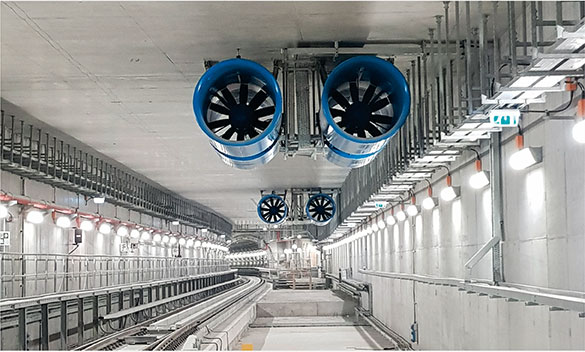
Road and tunnel systems function like large-scale “intelligent organisms” to ensure driver safety and maintain traffic flow. Tunnels, in particular, are enclosed and high-risk environments, requiring much more complex and redundant systems compared to open roads.


Copyright © Geonova Engineering Limited Company | Website Design: Alya Web LTD