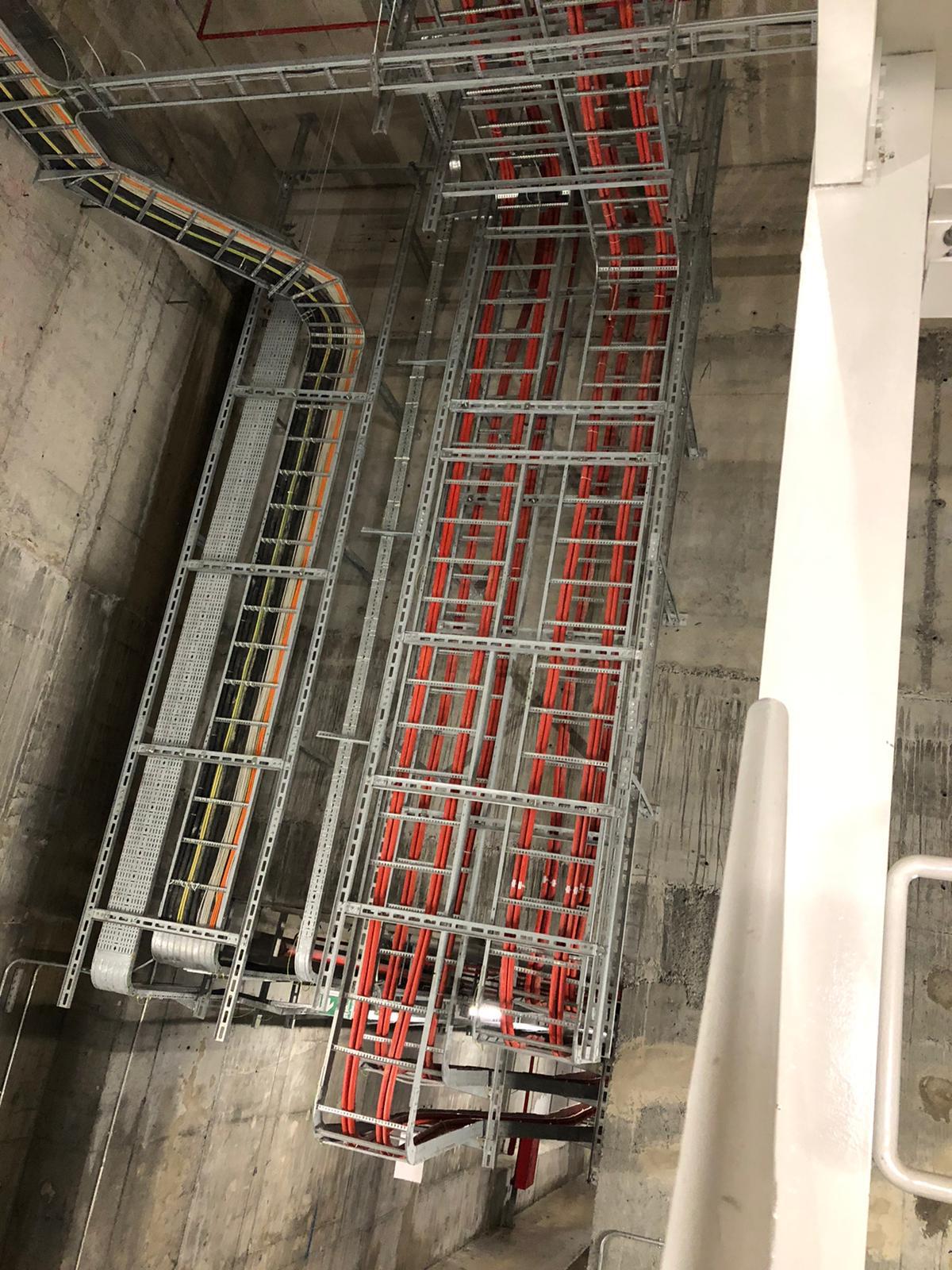
1. The Purpose of Cable Tray System
-
Mechanical Protection: Protects cables against impacts, crushing, and external factors.
-
Organization and Grouping: Prevents the clutter of hundreds of cables and separates power, control, and communication lines from each other.
-
Heat Management: Provides ventilation to prevent cables from overheating while carrying current (especially in ladder-type cable trays).
-
Accessibility: Facilitates access to cables in case of faults, making replacement or the addition of new cables easier.
2. What Should Be Considered During Installation?
Small mistakes made during the installation of cable support systems can lead to major fires or signal interference in the future:
-
Fill Rate: Cable ducts and trays should not be completely filled. To prevent overheating and allow for future cable additions, a reserve space of approximately 20%–40% should generally be left empty.
-
Cable Separation (EMI): Power cables and sensitive data cables should not run in the same tray. If this is unavoidable, a metal separator should be installed between them or a sufficient distance should be maintained.
-
Grounding Continuity: Since cable trays are made of conductive metal, grounding continuity must be ensured throughout the entire tray system. Grounding jumpers (flexible copper bonding connections) should be installed at tray junction points.
-
Sharp Edges: No burrs or sharp edges should remain where trays are cut; otherwise, cable insulation may be damaged during installation, causing short circuits.
-
Load Capacity: Support brackets and hangers should be installed at appropriate intervals (generally every 1.5–2 meters) to safely carry the total weight of the trays and the cables placed inside them.
3. What Can Be Done for a Better System? (Tips)
To take the system to the next level and achieve high-quality workmanship, the following practices should be implemented:
- BIM and 3D Modeling: Before installation, digital modeling should be carried out to prevent clashes with other disciplines such as HVAC ducts and fire protection systems.
- Color Coding: Different colored trays, conduits, or labels should be used for different voltage levels or systems (for example, red for fire alarm lines and metallic finishes for low-voltage power lines).
- Use of Curved Fittings: Instead of sharp 90-degree bends, radius fittings should be used to maintain the cable bending radius. This extends the service life of the cables.
- Cable Management Discipline: Cables should not be placed randomly inside trays; they should be neatly secured at regular intervals using cable ties or hook-and-loop fasteners. Especially in vertical runs, the cable weight should not be concentrated at a single point.
- Environmental Selection: In areas with high corrosion risk (such as coastal regions or chemical plants), Stainless Steel or Hot-Dip Galvanized systems should be preferred instead of standard galvanized materials.