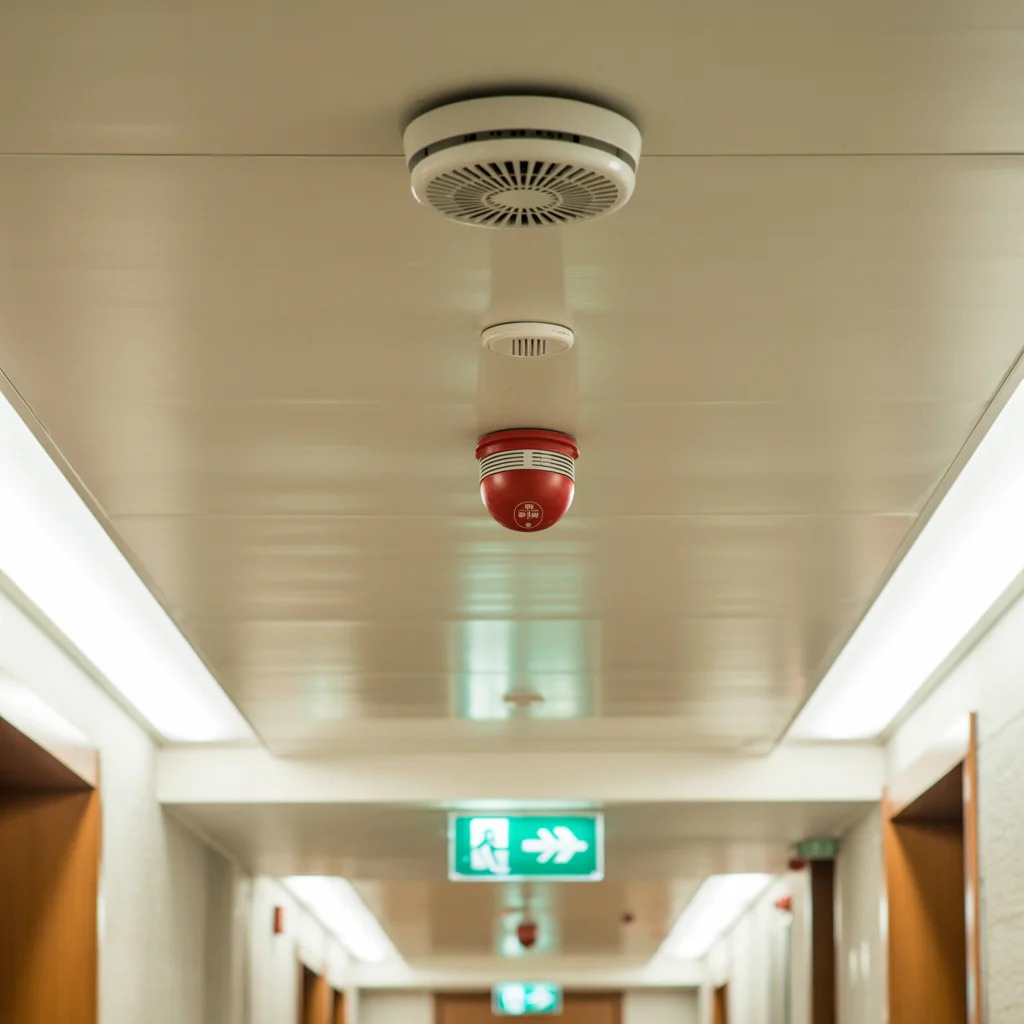
1. Purpose of Fire Detection and Alarm Systems
- Early Detection: It detects early signs of fire such as smoke, heat, or flames, reducing response time.
- Rapid Evacuation: It alerts building occupants through audible and visual alarms, enabling safe evacuation without panic.
- Notification to Authorities: It transmits fire signals to central monitoring stations or directly to fire services, ensuring rapid response from professional teams.
- System Integration: In the event of a fire, it manages critical functions such as bringing elevators to safe floors, controlling ventilation, and activating automatic suppression systems.
2. Importance of Design and Critical Points
A correct system design determines whether the system will truly function during a fire and whether false alarms are prevented. The following elements are critical in the design process:
- Environment-Appropriate Device Selection: Heat detectors are used in areas such as kitchens where smoke is normal; smoke detectors in offices; and flame detectors in industrial areas to prevent false alarms.
- Proper Placement and Standards: Detectors and manual call points must be designed according to the “Regulation on Fire Protection of Buildings” and TS EN 54 standards, ensuring no blind spots remain.
- Sensitivity Adjustment: The system must be sensitive enough to detect the smallest spark, yet stable enough not to be affected by dust or humidity in the environment, which increases reliability.
- Backup Power Sources: One of the most important technical criteria is that the system must continue operating without interruption during power outages using batteries or UPS support.
- Zoning (Area Segmentation): Especially in large buildings, correct zoning through addressable systems is essential to precisely locate the fire, saving time for emergency response teams.