1. Purpose of TV, IPTV, and SMATV Systems
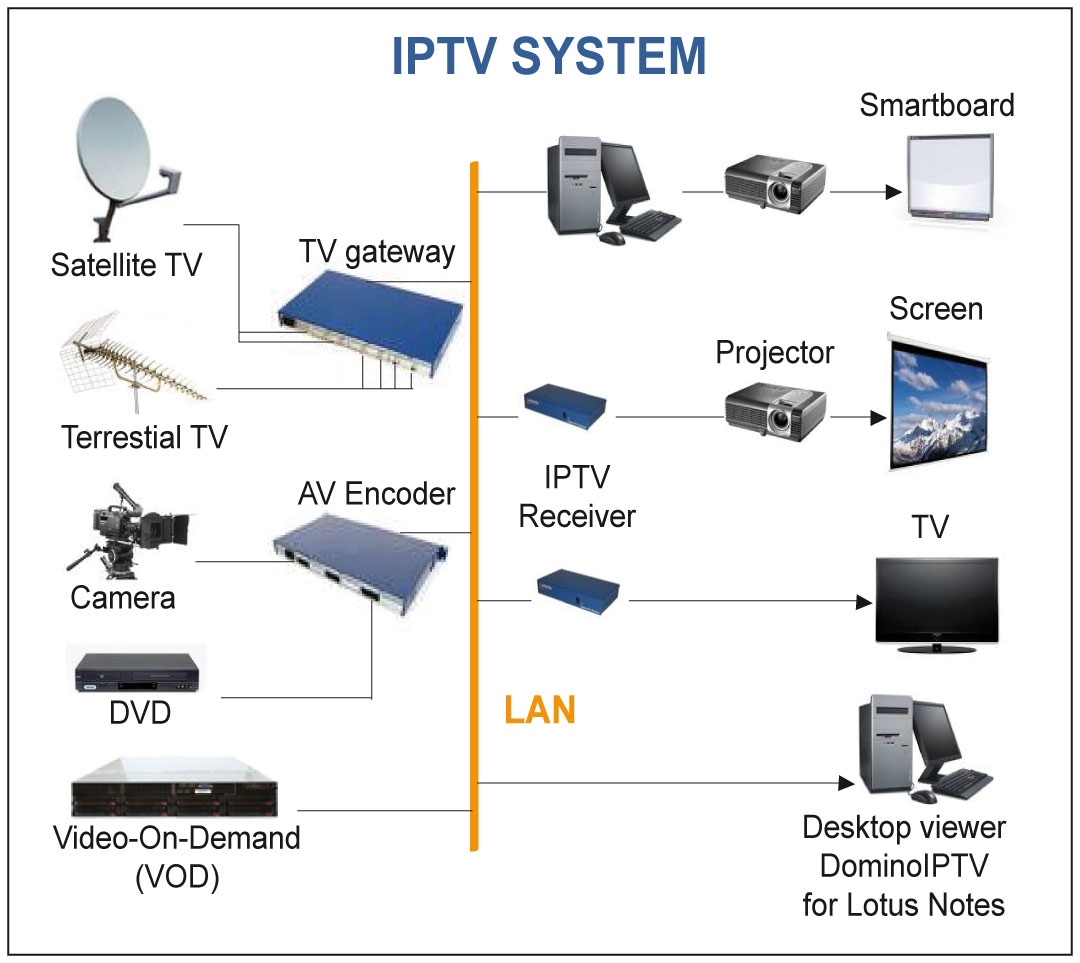
- Central Broadcast Distribution (SMATV): Instead of installing dozens of antennas on a building’s roof, it delivers satellite broadcasting to hundreds of apartments/rooms using a single antenna system (reducing visual pollution).
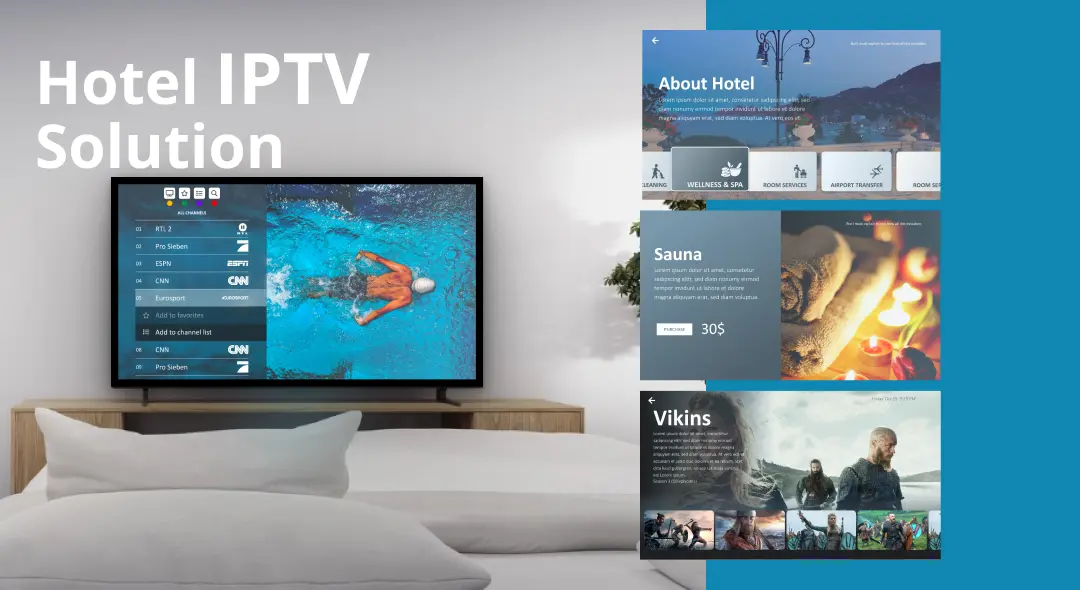
- Interactive Experience (IPTV): Operating over an existing IP network, this system not only provides TV viewing but also offers services such as welcome messages, room service ordering, bill viewing, and pay-per-view content.
- Corporate Communication: It enables announcements, advertisements, or training videos to be broadcast simultaneously across all screens within an organization.
- Personalization: It allows users to select language options, create favorite channel lists, and watch previously aired content (catch-up TV).
2. Importance of Design and Critical Points
These systems require technical precision in design to prevent freezing, noise, or signal loss:
- Signal Quality and Losses: In SMATV design, signal weakens as cable distance increases. With the correct selection of amplifiers and distribution components (splitters/tap-offs), a clear, high-quality image must be delivered even to the farthest room.
- Bandwidth Management: Since IPTV systems operate over a network, TV traffic must not slow down internet traffic. VLAN configuration and multicast support are essential in the design.
- Infrastructure Choice (Fiber vs. Coaxial): During the design phase, the choice between fiber optic and traditional copper cable must be made correctly based on building size, balancing cost and performance.
- Channel Capacity and Headend Unit: The “Headend” unit, which is the core of the system, must be designed to support future additions such as new channels or high-resolution broadcasts like 4K/8K.
- User Interface (UI) Design: In IPTV projects, fast, smooth, and user-friendly menu design directly affects customer satisfaction (especially in hotels).