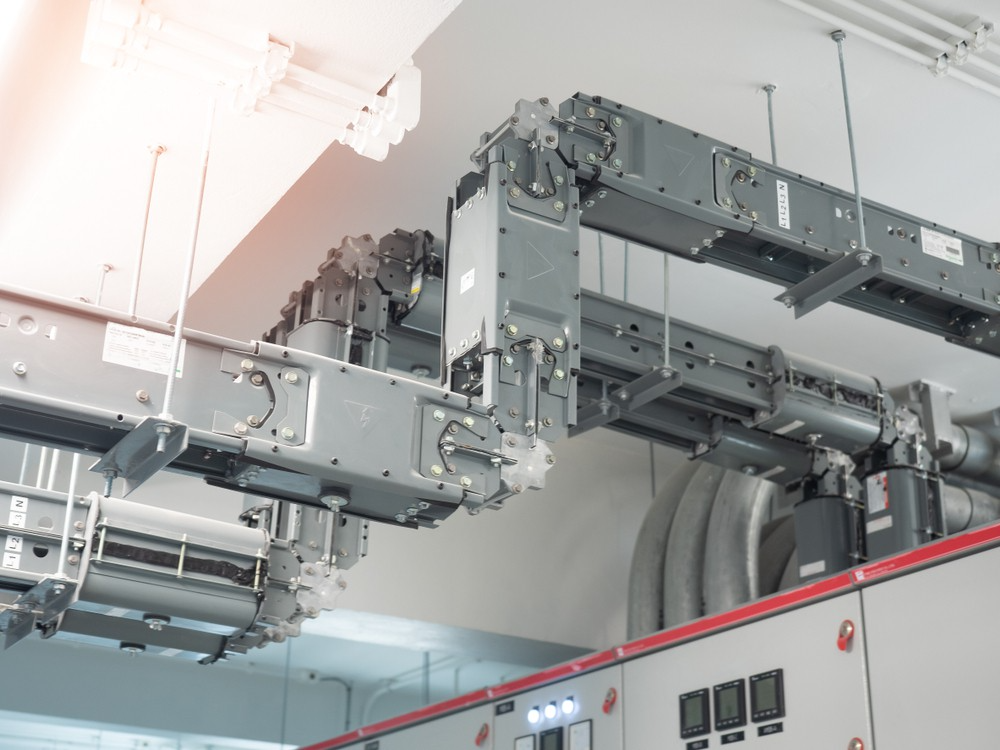
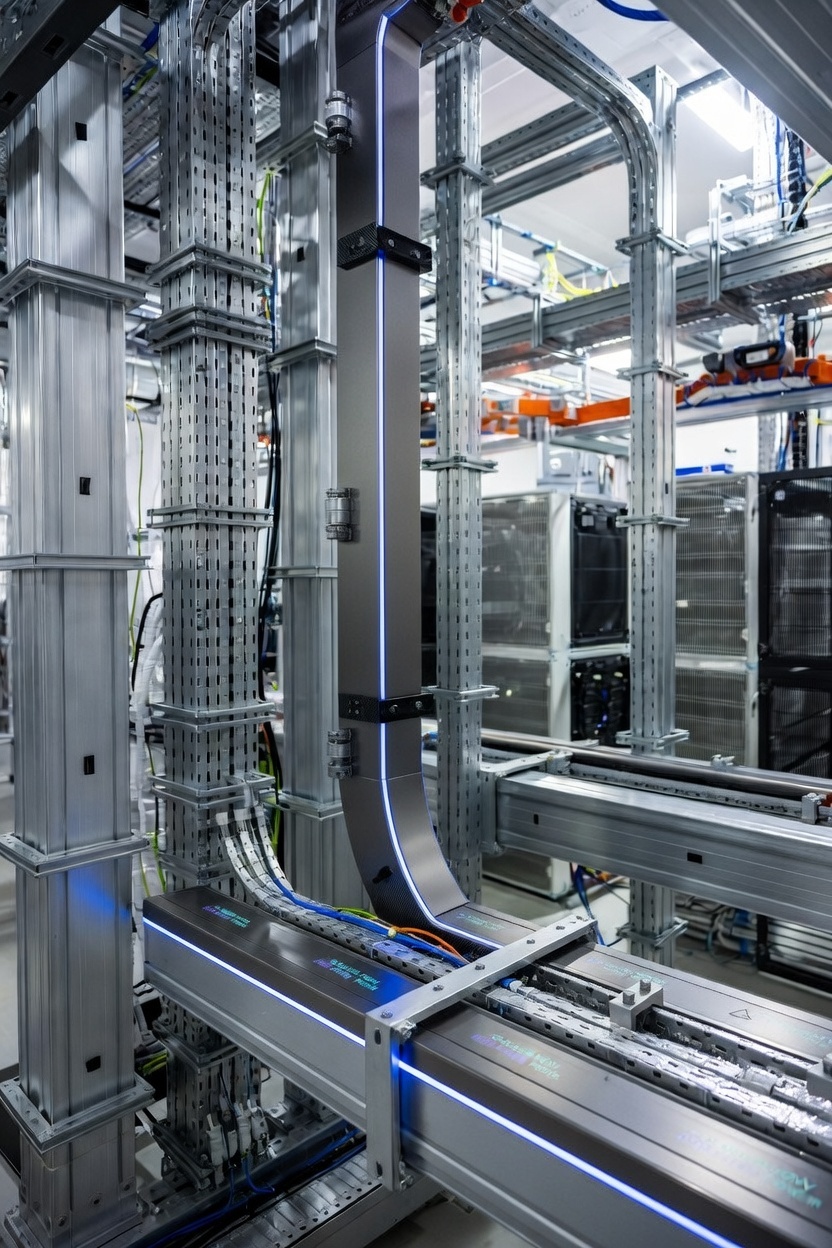
1. Purpose of Busbar Systems
The primary purpose of a busbar system is to transfer high-current electrical energy from the main distribution board to machines or sub-panels within a facility with minimal loss and maximum safety.
- Flexible Distribution: Instead of running separate cables to every point, a main backbone line is installed, and energy can be tapped from any point via \”tap-off boxes\”.
- Compact Structure: It replaces the large مساحة occupied by multiple ضخ cables with a much more compact solution (within a metal enclosure).
2. Importance and Advantages of Busbar Systems
Why are busbar systems preferred over cables in modern factories, tunnels, and skyscrapers?
- Fast and Easy Installation: Thanks to its modular structure (assembled like LEGO), installation time is significantly shorter than cabling and reduces human error.
- Fire Safety: Busbar systems are halogen-free and resistant to fire propagation. Unlike cable insulation, they do not emit flammable gases. Their metal enclosure also provides full protection against mechanical impacts.
- Low Voltage Drop: Due to the close and regular arrangement of conductors, inductive reactance is low, increasing energy efficiency.
- Scalability: When machine locations change in a factory, re-routing cables is difficult. In busbar systems, relocating a tap-off box takes only a few minutes.
3. Areas of Use
- Industrial Facilities: Production lines where machines frequently change position.
- High-Rise Buildings: Vertical energy distribution (busbar shafts).
- Data Centers: To provide uninterrupted and organized power to server racks.
- Tunnels: For long-distance lighting and power supply systems.